
TECHNESCAN PYP, KIT FOR RADIOPHARMACEUTICAL PREPARATION, 20MG/VIAL
4.1 Therapeutic indications
This medicinal product is for diagnostic use only.
Red blood cell labelling for blood pool scintigraphy.
Major indications are:
Angiocardioscintigraphy for:
*evaluation of ventricular ejection fraction
*evaluation of global and regional cardiac wall motion
*myocardial phase imaging
Organ perfusion and vascular abnormalities imaging for the detection of hemangioma.
Diagnosis and localization of occult gastro-intestinal bleeding
Determination of blood volume
Spleen scintigraphy
4.3 Contraindications
Hypersensitivity to the active substance or to any of the excipients listed in section 6.1 – please refer to the Product Insert/Patient Information Leaflet published on HSA for the full drug information.
4.2 Posology and method of administration
Posology
Adults
Blood pool scintigraphy:
The average activity administered after intravenous injection for in vivo or after in vitro labelling is 890 MBq (740–925 MBq).
Determination of blood volume:
The average activity administered after intravenous injection after in vitro labelling is 3 MBq (1–5 MBq).
Spleen scintigraphy:
The average activity administered after intravenous injection after in vitro labelling of denaturated erythrocytes is 50 MBq (20–70 MBq).
The optimal amount of nonradioactive stannous tin for preparation of red blood cells (RBCs) in vivo or in vitro is 10 to 20 mcg/kg body weight in adults. Especially in cases of in vitro labelling this dose should not be exceeded. Sodium pertechnetate (99mTc) should be injected ( in vivo) or added to the incubation mixture ( in vitro) after 30 minutes.
Renal impairment
Careful consideration of the activity to be administered is required since an increased radiation exposure is possible in these patients.
Paediatric population
The use in children and adolescents has to be considered carefully, based upon clinical needs and assessing the risk/benefit ratio in this patient group.
The activities to be administered to children and to adolescents may be calculated according to the EANM dosage card version 2016 for the indication:
Blood pool scintigraphy.
A[MBq]Administered = 56.0 x Multiple from table 1
Spleen scintigraphy:
A[MBq]Administered = 2.8 x Multiple from table 1
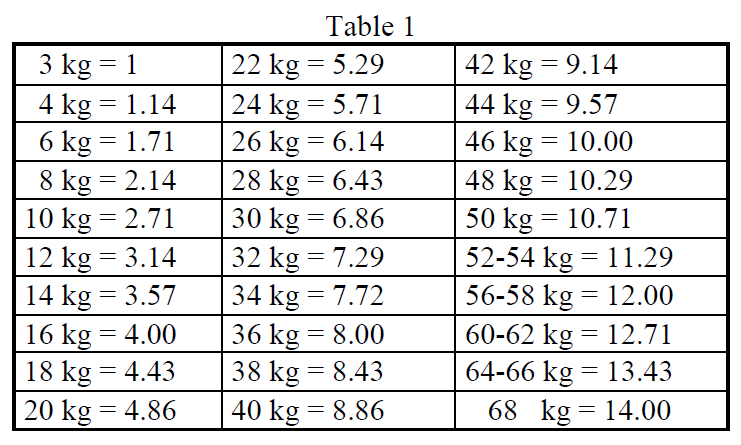
For blood scintigraphy, in very young infants (up to 1 year) a minimum dose of 80 MBq is necessary in order to obtain images of sufficient quality. For spleen scintigraphy a minimum dose of 20 MBq is necessary.
Method of administration
Multidose vial.
For intravenous injection.
This medicinal product should be reconstituted before administration to the patient. For instructions regarding reconstitution, see section 12 – please refer to the Product Insert/Patient Information Leaflet published on HSA for the full drug information.
For patient preparation, see section 4.4 – please refer to the Product Insert/Patient Information Leaflet published on HSA for the full drug information.
The freeze-dried stannous pyrophosphate lyophilizate (non-radioactive substance) is first reconstituted with isotonic sodium chloride solution for injection.
In vivo RBCs labelling method:
Injection of the reconstituted solution of the stannous pyrophosphate complex followed by injection of sodium pertechnetate (99mTc) 30 minutes later.
In vitro RBCs labelling method:
- Sampling of 6 ml of the patient’s blood
- In vitro incubation of the reconstituted solution of the taken total blood sample or separated RBCs, followed by adding sodium pertechnetate (99mTc) 30 minutes later.
- Second in vitro incubation of the RBCs and reinjection of the labelled RBCs 30 minutes later.
Modified in vivo RBCs labelling method (in vivo/in vitro):
- Injection of the reconstituted solution of the stannous pyrophosphate for in vivo “stannous-loading” of RBCs.
- In vitro RBCs labeling with sodium pertechnetate (99mTc) after taking a blood sample.
- Reinjection of the labelled RBCs.
Denatured RBCs labelling method:
- In vitro labelling of RBCs (see above) followed by denaturation e.g. heating of the labelled erythrocytes at 49–50°C for 25 minutes.
- Reinjection of the labelled denatured RBCs.
Image acquisition
Angiocardioscintigraphy:
The acquisition of images starts immediately after the injection of the tracer.
Occult digestive haemorrhages:
Since digestive bleeding occurs usually intermittently, it is recommended to perform several acquisitions over a period of 24 hours in addition to the images acquired initially after the injection.
Spleen scintigraphy:
Images are performed from 30 to 120 minutes after the injection. In case of accessory spleen research, the entire abdomen should be studied. If the patient has diaphragm rupture due to previous trauma, the chest should also be studied.
